The Art of Abstraction: When a Silk Scarf Becomes a Canvas
The Art of Abstraction: When a Silk Scarf Becomes a Canvas
 |
Abstract pattern on silk is not, as the word might suggest, an absence of meaning. It is, rather, a fullness of meaning freed from the obligation to represent any single identifiable thing. When you hold up a silk scarf printed with abstract forms, you are holding a piece of the same intellectual and artistic revolution that produced Kandinsky's first watercolors, Miró's dreaming biomorphic shapes, and the drip paintings of Pollock: the conviction that color, line, and form carry emotional and aesthetic weight entirely on their own terms, without needing to be anchored to the visible world. That the same ideas that transformed modern art in the early twentieth century should also have transformed modern textile design is not coincidental. Artists and designers were drinking from the same wells, responding to the same upheavals in science, philosophy, and social structure, and the abstract printed silk scarf is one of the most beautiful artifacts of that shared journey.
The abstract impulse in textile design has roots that predate the formal art movement by centuries. Islamic geometric design, which forbade figural representation and instead developed extraordinarily complex interlocking patterns of pure mathematical form, can be read as one of the earliest and most rigorous expressions of abstraction in applied art. The non-objective weavings of indigenous Andean cultures, the resist-dyed shibori textiles of Japan, the asymmetric brushwork traditions of East Asian painting: all of these contributed to the vocabulary that Western designers would eventually codify as abstraction in the modernist moment. But it was the decades between the two world wars that cemented the abstract print as a legitimate and desirable category of textile design, with studios in Paris, Vienna, and New York producing silk designs that owed more to the artist's studio than to the traditional pattern book.
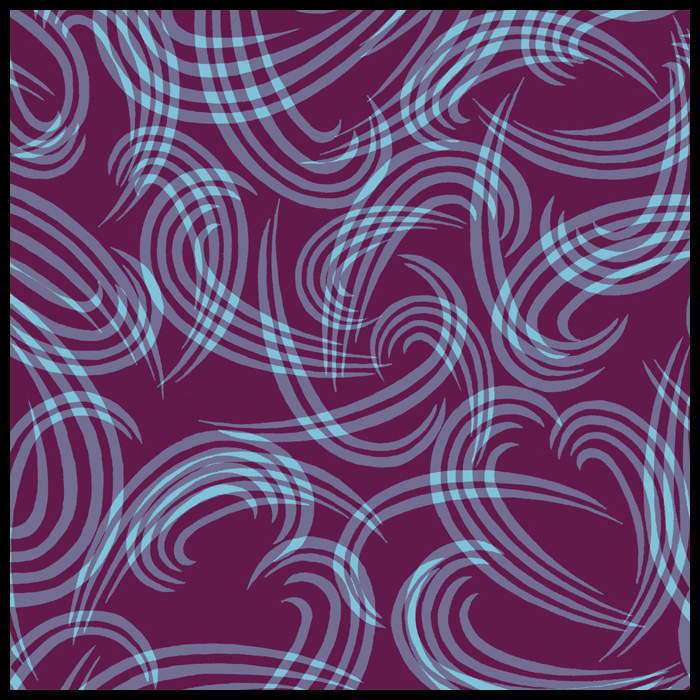
Custom Silk Scarf Manufacturer
The abstract silk scarf experienced one of its defining moments in the mid-twentieth century, when American and European fashion houses began commissioning fine artists to design textiles directly. Salvador Dalí designed scarves for Elsa Schiaparelli. The French silk houses of Lyon worked with abstract painters to translate gestural mark-making into screen-printed silk twill. Hermès, while better known for its figurative and equestrian motifs, also explored geometric and near-abstract compositions throughout its history. The result was a category of wearable art in which the boundary between the gallery and the wardrobe became genuinely porous, and in which a woman could carry a Miró or a Calder around her neck without the painting being any less a painting for being worn.
Contemporary abstract silk scarves range enormously in their visual language, from the spontaneous energy of gestural brushwork prints to the controlled geometry of hard-edge abstraction, from the layered translucency of watercolor-inspired composition to the bold flat planes of color associated with mid-century American painting. What they share is a commitment to pure visual experience: the pleasure of color relationship, the tension between organic and geometric form, the way that a certain combination of shapes and hues can produce an emotional response that bypasses language entirely.
Wearing an abstract-print silk scarf well requires treating it as the artist's work it is, which means giving it enough space to be seen and not competing with it unnecessarily. A large abstract scarf in vivid primary colors, perhaps referencing the influence of Mondrian or the Color Field painters, is at its most powerful when worn as a wrap over a plain black turtleneck and straight-leg trousers. The scarf becomes the painting; the clothing becomes the wall. For a more relaxed approach, an abstract scarf in earth tones, ochre, terracotta, dusty sage, works beautifully tied loosely at the neck of a linen shirt or tucked into the collar of a safari jacket, where its organic forms echo the textures of the natural world.
If the abstract print in question is predominantly monochromatic, using variations in value or texture rather than hue to create visual interest, it becomes surprisingly versatile as an accent against more complex garments. A grey-toned gestural print scarf worn over a subtle plaid jacket, or looped once through the handle of a woven straw bag, adds dimension without chaos, the abstraction allowing it to harmonize with other patterns in ways that a more literal figural print might not. For evening, an abstract scarf in deep jewel tones, amethyst bleeding into teal, or saffron dissolving into crimson, worn as a wrap over a simple silk slip dress, creates the impression of a painting coming to life, moving with you through a room, catching the light differently with every step. This is the particular genius of the abstract print on silk: it never looks the same twice, and it never lets you look at it long enough to feel that you have fully understood it.
Silk scarf for abstract pattern style theme is a great printed art motif that can be enjoyed the classical theme of the past by everyone. Everyone can create fun style with such a elegant printed design pattern for any silk scarf produce.
EZSilk is the most trusted silk fabric online company that offers free silk fabric sample service as well as free silk fabric color card, a leading silk fabric online supplier for silk fabric by the yard market and silk scarf manufacturer. They are aiming high-end silk fabric and custom silk scarves. They offer more than 100s colors per each silk fabric.
EZSilk is renowned as silk scarf manufacturers in the United States, silk necktie manufacturers in the USA. Silk scarf production has been started since 2001 with custom silk scarves development.
EZSilk emphasizes only high quality silk products along with silk fabric.
 |
| Silk Scarf Manufacturers |


Comments
Post a Comment